

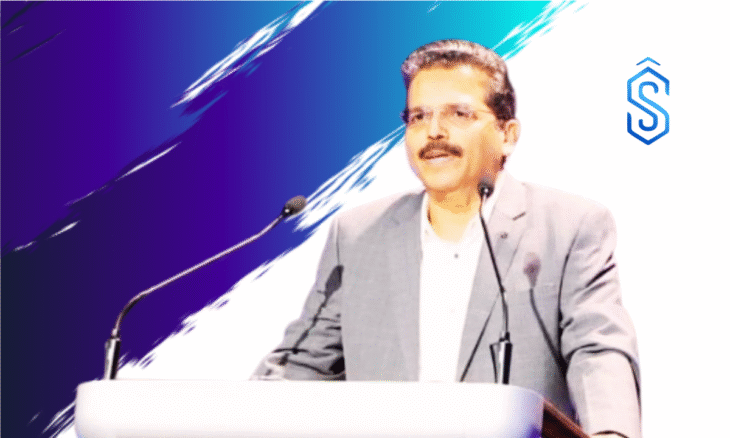
Pune: Rajneesh Jain, CFO at Reliance Jio Infocomm Ltd, underscored the expanding strategic role of Cost and Management Accountants (CMAs) in Global Capability Centres (GCCs) while delivering the keynote address at the RISE India: Leadership Summit 2026, organised by the Career Counselling & Placement Committee of The Institute of Cost Accountants of India (ICMAI) in association with the ICMAI Pune Chapter.
The summit focused on the theme “Strategic Leadership in Global Capability Centres (GCCs): CMAs as Architects of Value Creation,” highlighting how the CMA profession is evolving from traditional reporting functions to core business leadership roles in the global ecosystem.
Rajneesh Jain on CMA Career Prospects and Market Demand
Speaking to students and industry leaders, Rajneesh Jain said that compensation has become a key benchmark for young professionals, noting that CMAs currently command some of the strongest salary packages among professional institutes.
He highlighted that entry-level packages range between ₹12 lakh and ₹13 lakh annually, while top packages go as high as ₹35 lakh, reflecting strong industry demand.
He also emphasised that periods of adversity often create new opportunities, citing how Reliance converted challenges during the COVID-19 pandemic into growth by attracting ₹1,52,000 crore from global investors in a single evening.
Also Read: CMA Neeraj Joshi Elected National Vice-President of ICMAI for 2025–26
Rajneesh Jain Explains India’s GCC Shift from Cost Centres to Value Engines
Elaborating on India’s GCC journey, Rajneesh Jain said the country has transitioned from being a cost-arbitrage destination to a global capability and innovation hub.
India now hosts nearly 1,700 GCCs – around 50% of the world’s total – employing over 2 million professionals and contributing approximately $70 billion to the economy, with potential to scale up to nearly half a trillion dollars.
He stressed that GCCs are no longer limited to transactional roles and are now deeply involved in core engineering, R&D, global finance, analytics, AI-driven transformation, risk management, and enterprise-wide strategic decision-making.
CMAs Moving from Reporting to Responsibility: Rajneesh Jain
Reflecting on the evolution of the CMA profession, Rajneesh Jain shared insights from his early career, noting how CMAs were once seen primarily as plant accountants focused on reporting and audits.
Today, he said, the profession has shifted decisively towards responsibility, strategic enablement, and business decision-making.
He illustrated this shift with a real-world example from the liberalisation era, explaining how a move from cost-plus accounting to marginal costing helped Indian enterprises regain competitiveness against multinational rivals.
Also Read: India’s AI-Native GCC Workforce Set for 1.3 Million New Jobs by 2030: NLB Services Report
Rajneesh Jain on CMAs as Business Model Shapers in GCCs
According to Rajneesh Jain, finance professionals in GCCs will increasingly shape business models rather than merely track performance.
He outlined how CMAs are uniquely positioned to influence capital allocation, translate data into actionable decisions, and balance growth, risk, and governance in real time.
He highlighted large-scale compliance management at Reliance as an example of how technology-enabled finance leadership can handle millions of statutory requirements efficiently through digital platforms and automated escalation systems.
Rajneesh Jain Stresses Importance of Data Analytics and Strategic Finance
Rajneesh Jain praised ICMAI for introducing data analytics and other specialised courses aligned with industry needs, noting that these initiatives have already improved CMA placement outcomes.
He emphasised that skills in data analytics, business partnering, and strategic finance are critical for CMAs to move from back-end reporting roles to front-end leadership positions.
CMAs to Lead India’s GCC-Led Growth Story: Rajneesh Jain
Concluding his address, Rajneesh Jain said CMAs are well-positioned to lead India’s GCC-driven growth under the broader vision of Viksit Bharat 2047.
He stated that CMAs can anchor financial discipline, risk intelligence, and growth orientation while enabling innovation and global integration of Indian talent.
As GCCs increasingly take on profit ownership and strategic mandates, he added, CMAs can serve not just as participants but as enablers and value architects in India’s next phase of economic growth.